Introduction
The Hmong people—also known in broader Chinese administrative terminology as part of the Miao nationalities—represent one of the most historically complex and globally dispersed highland populations in Asia. Today, Hmong communities live across China, Vietnam, Laos, Thailand, Myanmar, the United States, France, Australia, and several other countries.
Modern scholarship does not treat Hmong history as a simple uninterrupted ethnic narrative extending unchanged from antiquity to the present. Instead, historians and anthropologists understand Hmong identity as the product of:
- long-term migration,
- frontier politics,
- imperial expansion,
- upland adaptation,
- colonial warfare,
- Cold War geopolitics,
- and transnational diaspora formation.
Over the past fifty years, the Hmong have become a major subject within:
- anthropology,
- refugee studies,
- Asian studies,
- memory studies,
- migration history,
- and indigenous cultural preservation research.
1. The Problem of Naming: “Hmong” and “Miao”
One of the most important scientific clarifications concerns terminology.
“Hmong” is not identical to “Miao”
In the People’s Republic of China, Miao (苗) is an official state classification that includes multiple culturally and linguistically related populations.
However:
- not all people classified as Miao identify as Hmong,
- and not all Hmong communities share identical historical experiences.
“Hmong” is generally understood as a self-designation used by specific groups within the broader Hmong–Mien linguistic world.
Modern scholars therefore distinguish between:
- administrative ethnic classification, and
- self-identified ethnocultural identity.
This distinction is essential in serious academic work.
2. Origins and Early Historical Development
The Hmong–Mien Language Family
Linguistic evidence places the ancestors of Hmong-speaking peoples within the broader Hmong–Mien language family originating in southern China.
Most scholars associate early Hmong–Mien populations with:
- the mountainous regions south of the Yangtze River,
- especially areas corresponding to present-day:
- Guizhou,
- Hunan,
- Guangxi,
- Yunnan.
However, historians emphasize an important methodological caution:
Ancient Chinese references to “Miao” populations cannot automatically be equated with all modern Hmong communities.
Many popular nationalist narratives oversimplify this issue by projecting present-day ethnic identities directly into ancient history.
Current scholarship avoids such direct historical continuity claims unless supported by strong linguistic, archaeological, and documentary evidence.
3. Relations with Chinese Dynasties
For centuries, Hmong/Miao communities inhabited frontier upland regions beyond the effective control of many imperial states.
Frontier Dynamics
Relations with successive Chinese dynasties were shaped by:
- taxation,
- land competition,
- military campaigns,
- migration pressure,
- and attempts at administrative integration.
Imperial expansion into southwestern China intensified particularly during:
- the Ming dynasty,
- and later the Qing dynasty.
4. The Miao Rebellions
Between the fifteenth and nineteenth centuries, several major uprisings occurred in southwestern China involving Miao/Hmong populations.
The 1795–1806 Miao Rebellion
One of the largest rebellions erupted during the Qing dynasty in:
- Guizhou,
- Hunan,
- and neighboring mountainous areas.
The rebellion was eventually suppressed with heavy casualties and widespread displacement.
Historians consider this period important because it accelerated:
- political fragmentation,
- forced migration,
- and southward population movement toward mainland Southeast Asia.
5. Migration into Southeast Asia
A Long-Term Historical Process
Modern research rejects the idea of a single “great migration.”
Instead, migration occurred gradually over multiple generations, especially from:
- the late eighteenth century,
- through the nineteenth century,
- into the early twentieth century.
Primary causes included:
- warfare,
- demographic pressure,
- frontier expansion,
- economic adaptation,
- and political instability.
Hmong communities gradually settled across:
- northern Vietnam,
- Laos,
- Thailand,
- and parts of Myanmar.
6. Highland Adaptation and Social Organization
Anthropologists have long studied the Hmong as a major upland society of mainland Southeast Asia.
Economic Systems
Traditional Hmong economies often involved:
- swidden agriculture,
- upland maize cultivation,
- livestock raising,
- hemp and textile production,
- and mountain trade networks.
Clan Structure
Hmong societies developed strong clan-based social systems that played central roles in:
- marriage regulation,
- dispute mediation,
- migration organization,
- and cultural continuity.
These clan structures later became crucial in refugee resettlement and diaspora survival.
7. Colonialism and the Transformation of Highland Politics
During the French colonial period in Indochina, Hmong populations became increasingly integrated into regional political and military systems.
Colonial authorities alternated between:
- indirect rule,
- military recruitment,
- and attempts to regulate opium production and upland trade.
Different Hmong groups developed different political alliances depending on:
- geography,
- clan interests,
- and local power relations.
There was never a single unified “Hmong political position.”
8. The Secret War in Laos (1961–1975)
The most internationally significant event in modern Hmong history was the CIA-backed conflict in Laos during the Cold War.
The Cold War Context
As part of anti-communist operations in Laos, the United States Central Intelligence Agency recruited large numbers of Hmong fighters into Special Guerrilla Units (SGUs).
The best-known Hmong military leader was:
General Vang Pao
Under CIA coordination, Hmong forces participated in:
- intelligence operations,
- rescue missions for downed American pilots,
- mountain warfare,
- and anti-Pathet Lao campaigns.
9. Scientific Caution: Not All Hmong Were on the Same Side
One of the most important corrections in recent scholarship is the rejection of simplified Cold War narratives.
Modern historians emphasize that:
- not all Hmong supported the CIA,
- not all Hmong opposed communist forces,
- and political alignments varied significantly.
Choices were shaped by:
- local conditions,
- clan politics,
- survival strategies,
- and regional military realities.
This complexity is often lost in popular retellings.
10. Refugee Crisis and Global Diaspora
After the communist victory in Laos in 1975:
- large numbers of Hmong fled across the Mekong River into Thailand,
- many spent years in refugee camps,
- and thousands were later resettled abroad.
This produced one of the largest highland refugee diasporas of the twentieth century.
11. The Hmong in the United States
Beginning in the late 1970s, major Hmong communities formed in:
- California,
- Minnesota,
- Wisconsin.
Today, the United States hosts the world’s largest Hmong diaspora population outside Asia.
Cities such as:
- Saint Paul,
- Minneapolis,
- and Fresno
became major centers of Hmong political, educational, and cultural life.
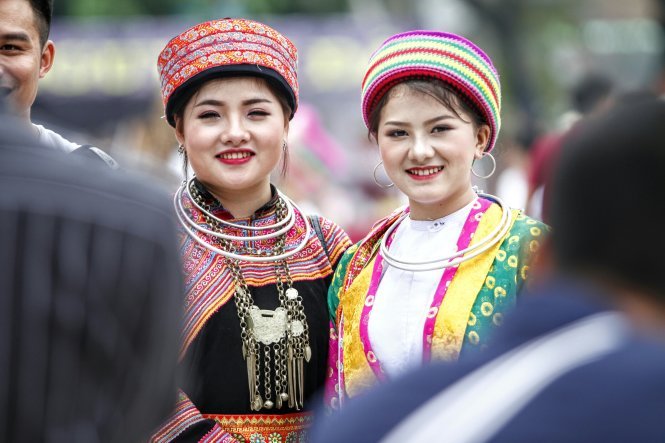
12. Cultural Preservation and Reinvention
Despite global dispersal, Hmong communities have maintained strong cultural continuity.
Major Cultural Traditions
Key cultural practices include:
- qeej (reed-pipe music),
- embroidery and textile arts,
- oral storytelling,
- shamanic ritual systems,
- New Year festivals,
- and clan-based ceremonial traditions.
Anthropologists often cite the Hmong as an example of:
strong transnational cultural resilience under conditions of displacement.
13. Writing Systems and Language Preservation
Historically, the Hmong did not possess a single universally standardized writing system.
Modern systems include:
- Romanized Popular Alphabet (RPA),
- Pahawh Hmong,
- Chinese-based scripts,
- and regional orthographic adaptations.
Writing systems became deeply connected to:
- religion,
- education,
- identity politics,
- and diaspora cohesion.
14. Hmong Studies in Contemporary Academia
Today, Hmong communities occupy a major place in international scholarship.
Key research themes include:
- refugee trauma,
- war memory,
- diaspora identity,
- transnational kinship,
- indigenous ecological knowledge,
- and minority-state relations.
Universities in the United States increasingly include:
- Hmong Studies,
- Asian American Studies,
- Refugee Studies,
- and Southeast Asian Studies programs focusing on Hmong experiences.
15. Common Misconceptions
“All Miao are Hmong”
Incorrect.
“Miao” is a broader administrative category.
“The Hmong are a completely unified global people”
Incorrect.
There are:
- regional divisions,
- linguistic variation,
- different migration histories,
- and diverse political experiences.
“Ancient Chinese records describe the modern Hmong exactly”
Not scientifically demonstrable.
Historical continuity remains a subject of ongoing scholarly debate.
Conclusion
The history of the Hmong people is not simply a story of isolation in remote mountains. It is a global history shaped by:
- imperial expansion,
- migration,
- colonialism,
- Cold War conflict,
- forced displacement,
- and transnational cultural reconstruction.
From the highlands of southern China to refugee camps in Thailand and urban communities in the United States, the Hmong have transformed from a predominantly upland frontier society into a globally connected transnational people.
Modern scholarship increasingly recognizes that the Hmong are not merely survivors of historical upheaval, but active participants in the making of contemporary global history.
Their experience offers one of the clearest examples of how identity, memory, migration, and cultural resilience interact across borders and generations in the modern world.
#hmong #hmoob